

























































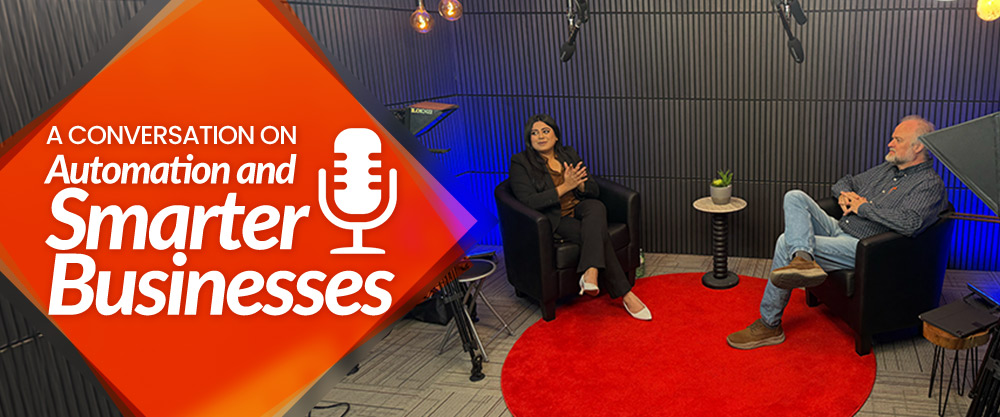
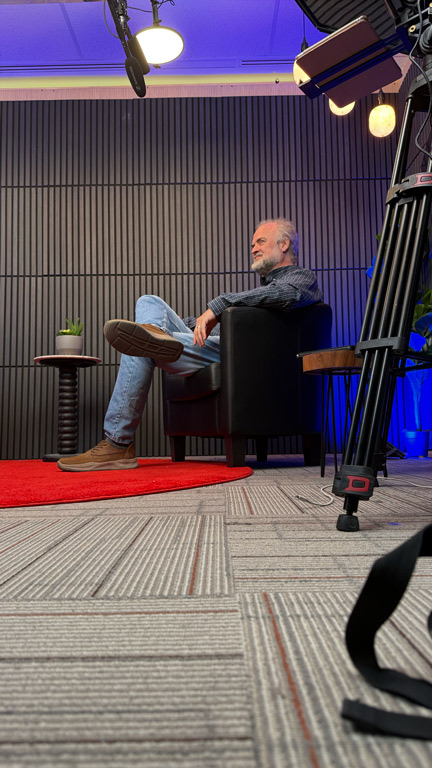
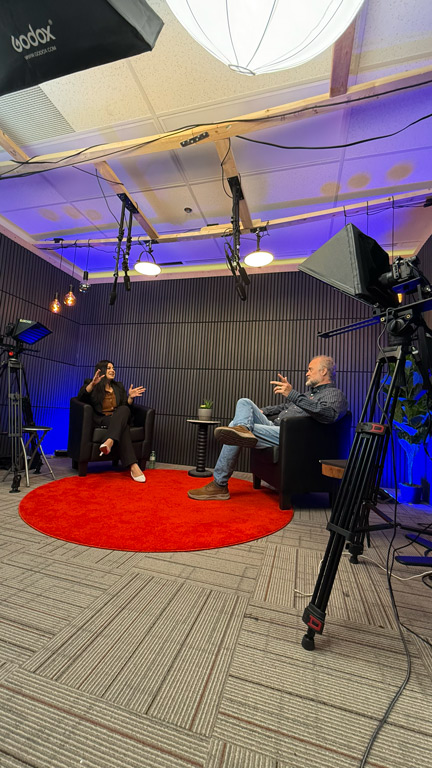
Recently, CanadianSME Small Business Magazine invited Keystroke.ca founder and president Ken Quigley onto the Small Business Podcast for a conversation about CRM, automation, recurring revenue, and what it really takes for small businesses to grow in 2026.
The discussion quickly evolved into something much bigger.
What started as a conversation about technology turned into an honest and surprisingly entertaining deep dive into entrepreneurship, customer retention, recurring revenue, and the mindset required to build a sustainable business over the long term.
Hosted by Kripa Anand, the episode explored how smaller companies can compete with much larger organizations without massive budgets or large internal teams.
One of the strongest takeaways came early in the discussion:
“People for relatively little money can build automation that allows them to be fast and efficient in ways that can compete with the bigger players.”
That idea became the foundation for the entire conversation.
Small Businesses Don’t Need Bigger Budgets Anymore
Thirty years ago, business technology looked very different.
There was no modern internet, no Microsoft Office ecosystem, no cloud collaboration, and no centralized customer data. Most software lived on isolated computers, and “workflow automation” wasn’t even part of the vocabulary.
Fast forward to today, and even a one-person business can access tools that once required entire departments to manage.
Automated follow-ups, centralized customer information, response tracking, nurture campaigns, appointment booking, surveys, and lead routing are now available to businesses operating on extremely modest budgets.
More importantly, those tools allow smaller teams to move faster.
One of the most memorable lines from the episode summarized that philosophy perfectly:
“Any kind of workflow that relies on human intervention will fail.”
The point wasn’t to remove people from the process. It was to eliminate the friction that slows businesses down and causes opportunities to slip through the cracks.
The Hot Tub Story That Became a Lesson in Recurring Revenue
One of the highlights of the interview came from an unexpected place: a family trip to buy a hot tub.
During the conversation, the owner of the hot tub business explained how difficult it was to create recurring revenue in an industry built around large one-time purchases.
The answer turned out to be hiding in plain sight.
Instead of focusing only on the initial sale, the discussion shifted toward consumables: filters, chemicals, maintenance supplies, and replacement products customers would continue buying long after the installation.
The suggestion was simple:
Create subscription-style programs around those recurring needs and reward customers for long-term commitment.
According to the story shared on the podcast, the company implemented the idea within a month and saw strong results afterward.
The lesson applies far beyond hot tubs.
Almost every business has opportunities for recurring engagement, recurring revenue, or membership-style relationships. The challenge is recognizing them before competitors do.
Building a Business That Has Real Long-Term Value
Another important theme throughout the episode was business valuation — something many entrepreneurs ignore while focused on day-to-day survival.
A particularly impactful example involved a barber who had successfully operated for decades but never built predictable recurring revenue or a structured customer database.
When retirement approached, selling the business became difficult because there was very little transferable value beyond the physical location itself.
That story reinforced a critical point:
Customer relationships only become true business assets when they are organized, measurable, and scalable.
CRM systems are often viewed purely as sales tools, but the conversation highlighted something broader. Properly managed customer data increases not only operational efficiency, but the long-term value of the company itself.
The Surprisingly Honest Origin of the “Keystroke” Name
The podcast also included one of the funniest moments of the interview: the origin story behind the company name itself.
Back in 1994, before Windows became dominant, the original vision was heavily centered around DOS workflows and keyboard efficiency. Fast typing and command-driven interfaces inspired the name “Keystroke.”
As it turns out, the prediction that DOS-style workflows would remain dominant did not age particularly well.
That self-awareness and humor became a recurring theme throughout the episode and made the conversation feel refreshingly genuine compared to the polished corporate messaging people often expect from business podcasts.
Growth Through Strategy — Not Just Momentum
The interview also explored how Keystroke evolved from a smaller reseller into the world’s #1 ACT! CRM reseller.
Rather than relying entirely on slow organic growth, the company combined traditional relationship-building with strategic acquisitions across the ACT consultant ecosystem.
By identifying businesses losing momentum and integrating them into a larger long-term vision, Keystroke accelerated its growth significantly over time.
One of the best full-circle moments from the story?
The instructor from the original ACT certification class eventually ended up working at Keystroke.
The Real Message Behind the Conversation
More than anything, the podcast served as a reminder that sustainable business growth rarely comes from flashy shortcuts.
It comes from building systems that consistently move opportunities forward.
• Import your customer data.
• Keep it organized.
• Track engagement
• Automate repetitive processes.
• Follow up consistently.
• Focus on relationships.
• Repeat.
That process may not sound glamorous, but it works — and the episode made it clear that these are not just theories. They are the same systems and strategies used internally every day at Keystroke.
As stated during the conversation:
“We eat our own dog food.”
For small businesses navigating 2026, the message was simple:
You do not need enterprise-level budgets to compete anymore.
You need smarter systems, better workflows, and the ability to act consistently before opportunities disappear.
Come visit us in Toronto on May 22 during the CanadianSME Small Business Show: